


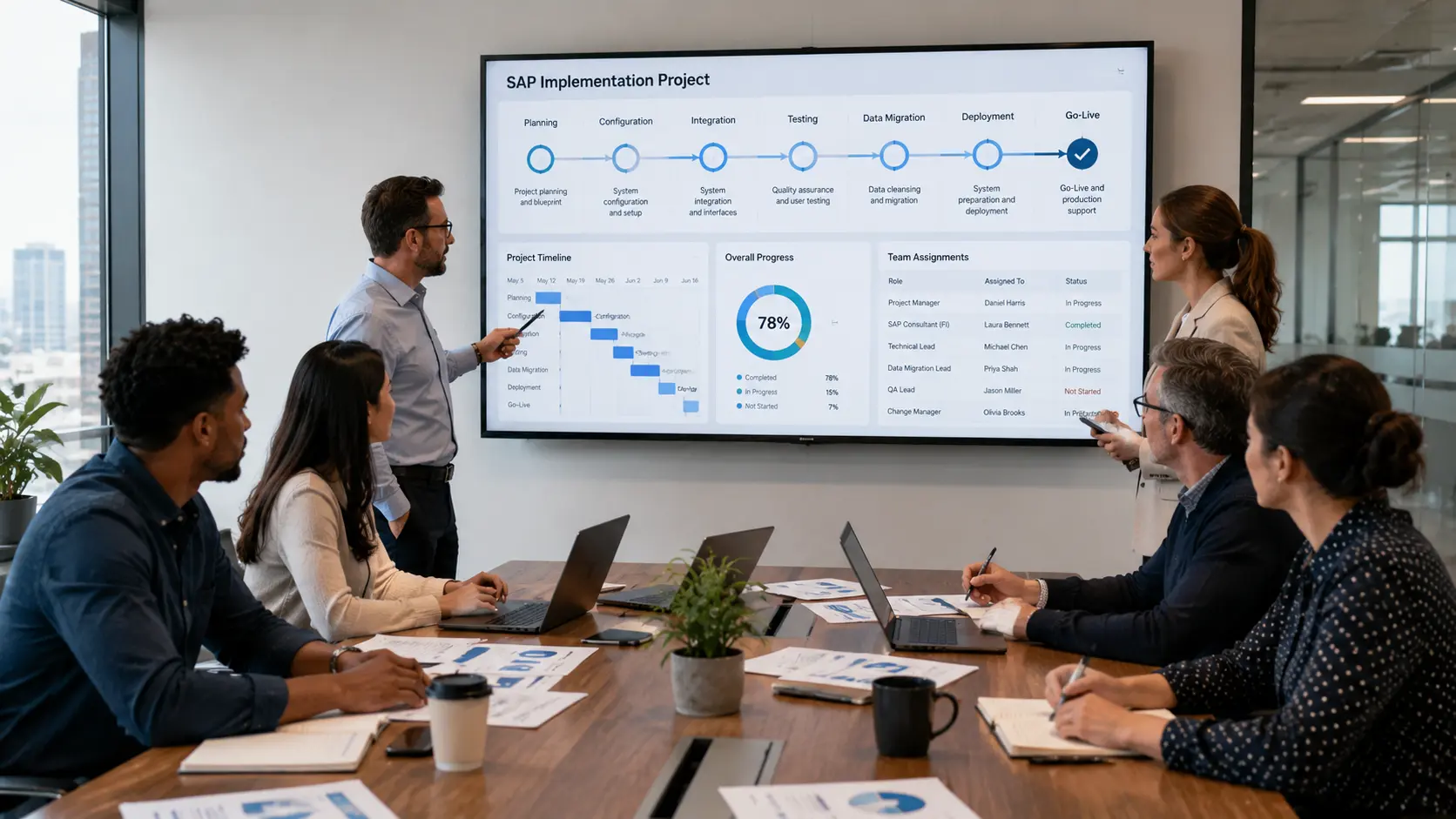
SAP Implementation Staffing USA: Build the Right SAP Team
A successful SAP project depends on more than software. It depends on having the right people with the right skills at the right stage of the project. From planning and configuration to testing, go-live, and ongoing support, even a strong internal IT team can face resource gaps when workloads increase.
That is why SAP Implementation Staffing USA has become a practical option for organizations that need specialized SAP expertise without building a large permanent workforce. Whether you are launching a new SAP environment, migrating to S/4HANA, or improving an existing system, flexible staffing can help you add experienced professionals when they are needed most.
The goal is simple: build a capable SAP team that fits your project, timeline, technology environment, and business objectives.
SAP Implementation Staffing USA for Complex Projects
SAP Implementation Staffing USA can support businesses throughout different phases of an SAP project. The staffing requirements often change as the project progresses, so having the ability to scale the team can be valuable.
During planning, organizations may need solution architects and business analysts. Configuration can require functional consultants across areas such as SAP FICO, MM, SD, or PP. Later, testing teams, integration specialists, data experts, and technical consultants may become more important.
Consider a retail company implementing SAP across multiple locations. It may initially need a large project team to define processes and configure the platform. Once the system reaches stabilization, the organization may reduce the team and retain only the specialists required for optimization and support.
What to Look for in SAP Implementation Talent
Finding SAP professionals is not simply about matching keywords on a resume. The right candidate should have experience that fits the actual project environment.
Start with technical and functional expertise. Determine which SAP modules, platforms, integrations, databases, development tools, or migration technologies are required. Then consider the candidate’s experience with projects of similar size and complexity.
Industry knowledge can also make a difference. A consultant who understands manufacturing processes may quickly recognize production and supply-chain challenges. Similarly, a consultant with retail, healthcare, financial services, or logistics experience may bring valuable context to a specialized implementation.
Communication matters, too. SAP consultants often work between technical teams and business stakeholders. Someone who can explain complex issues clearly and collaborate effectively can help reduce misunderstandings during critical project phases.
SAP Support Staffing USA: Keeping Systems Reliable

Going live is not the end of an SAP project. In many ways, it marks the beginning of a new stage. Users need assistance, integrations must be monitored, issues need to be resolved, and business processes may require ongoing optimization.
SAP Support Staffing USA helps organizations add professionals who can provide specialized support when internal teams need additional capacity. Support requirements may include troubleshooting, incident management, application maintenance, configuration changes, performance monitoring, testing, and user assistance.
Imagine a company that has recently completed an SAP implementation. The system is operational, but employees are submitting more support requests than expected. Instead of overwhelming its internal IT team, the organization can add experienced SAP support professionals to handle specific workloads while internal employees focus on strategic priorities.
Why Flexible SAP Support Can Be Valuable
SAP support workloads are not always predictable. A major system update, business expansion, integration issue, or organizational change can suddenly increase demand for specialized expertise.
Flexible staffing allows businesses to respond without necessarily committing to permanent headcount for every temporary requirement. Teams can be adjusted based on business conditions, project priorities, and support volumes.
This approach can also help organizations access skills that are difficult to maintain internally. For instance, a company may rarely need a particular SAP integration specialist but require that expertise urgently during a major system change.
SAP Managed Services Staffing USA for Ongoing Operations
Some organizations prefer a more structured approach to long-term SAP operations. SAP Managed Services Staffing USA can help businesses build or supplement teams responsible for continuous application management and operational support.
Managed services staffing may cover activities such as system monitoring, incident resolution, application maintenance, security coordination, performance management, release support, and continuous improvement. The exact scope depends on the organization’s SAP landscape and service model.
A growing US company, for example, may operate SAP across finance, procurement, sales, and supply chain while expanding into new markets. Instead of repeatedly assembling short-term teams whenever a problem appears, it can establish a consistent support structure with specialists available for recurring operational needs.
Implementation Staffing vs. Support Staffing
Implementation and support require different skill sets, even though they may involve some of the same SAP professionals.
Implementation teams are generally focused on designing, configuring, integrating, testing, migrating, and deploying the new environment. Their work is project-oriented and often tied to specific milestones.
Support teams, on the other hand, focus on system stability and continuous improvement after deployment. Their responsibilities can include resolving incidents, managing changes, supporting users, monitoring systems, and improving existing processes.
Understanding this difference helps companies avoid a common mistake: using the same staffing model for every stage of the SAP lifecycle.
Build a Scalable SAP Workforce
A scalable workforce does not mean constantly changing your entire team. It means having the flexibility to adjust resources as project requirements evolve.
A large implementation may require a broad team during the design and deployment stages, followed by a smaller group during stabilization. Later, the organization might bring in specialized consultants for upgrades, integrations, automation, or optimization.
This model can help businesses align staffing with actual workloads. It also gives internal employees opportunities to work alongside experienced specialists and develop knowledge that can remain within the organization after an engagement ends.
How to Choose an SAP Staffing Partner
The staffing partner you choose can influence the quality and speed of your project team. Look for a provider that takes time to understand your SAP environment instead of simply sending generic candidate profiles.
Ask about the provider’s SAP talent pool, screening process, experience with similar projects, engagement models, onboarding procedures, and approach to replacing consultants when necessary. It is also worth discussing how quickly they can respond when project requirements change.
A good partner should understand that every SAP environment is different. Your requirements may depend on your industry, business processes, existing systems, project timeline, and long-term technology strategy.
Questions to Ask Before Hiring SAP Professionals
Before beginning a staffing engagement, clarify the project’s scope and expectations. What SAP modules are involved? What deliverables need to be completed? How long will the project run? Which responsibilities will remain with your internal team?
You should also establish communication expectations, working arrangements, reporting structures, and success measures. Clear answers make it easier for both the organization and the staffing provider to identify suitable professionals.
For example, if your priority is an S/4HANA migration, you may need consultants with hands-on experience in data conversion, integration, testing, and cutover planning. If the requirement is ongoing support, incident management and application maintenance experience may matter more.
Conclusion
SAP success is closely connected to people. Technology provides the platform, but experienced professionals are responsible for designing processes, solving problems, managing changes, and helping teams get value from the system.
SAP Implementation Staffing USA, SAP Support Staffing USA, and SAP Managed Services Staffing USA give organizations flexible ways to access specialized SAP expertise throughout the technology lifecycle. By defining project requirements clearly and choosing professionals with relevant technical, functional, and industry experience, businesses can create teams that are better aligned with their goals.
The best staffing strategy is not necessarily the largest one. It is the one that puts the right expertise in place when the business needs it.
Planning an SAP implementation, upgrade, migration, or ongoing support initiative? Explore flexible SAP staffing solutions and build a team around your specific technical and business requirements. Start by defining the skills, project timeline, and SAP modules you need, then connect with experienced professionals who can help move your project forward.
Connect with through LinkedIn.











Leave a Reply