


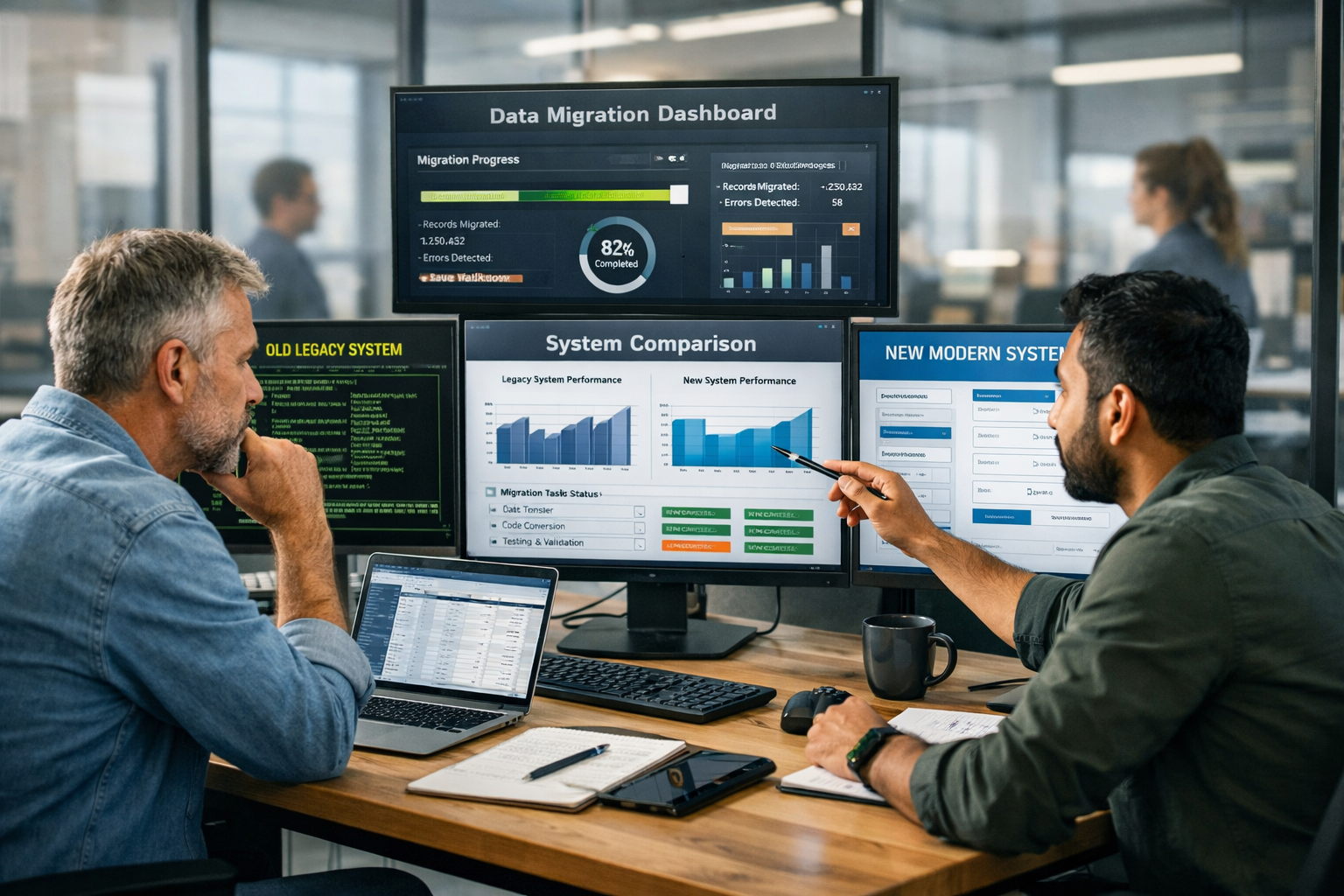
QA Testing for Legacy System Modernization
DSSP2026-03-18T17:31:44+00:00QA Testing for Legacy System Modernization
QA testing for legacy system modernization ensures that old systems continue to work correctly when they are upgraded or moved to new technologies. It helps businesses avoid errors, protect data, and keep operations running smoothly during changes.
QA testing for legacy system modernization helps validate system functionality, protect existing data, and ensure smooth performance when upgrading old systems.
Why QA Testing for Legacy System Modernization is Important
Legacy systems are often complex and deeply connected to business operations. When these systems are updated or replaced, even a small issue can cause major disruptions.
With proper QA testing services, businesses can safely modernize systems without breaking existing workflows.
- Prevents system failures during upgrades
- Ensures old features still work correctly
- Protects critical business data
Key Areas in QA Testing for Legacy System Modernization
Data Validation in Legacy System Modernization
Testing ensures that all data is correctly transferred and remains accurate after modernization.
Functionality After System Upgrade
Applications must continue to perform the same tasks even after moving to new platforms.
Performance Improvement Testing
Modern systems should run faster and more efficiently. Testing checks system speed and responsiveness.
Integration with New Systems
Updated systems must connect properly with new tools, APIs, and platforms.
Security in Modernized Systems
Testing ensures that updated systems are secure and protect sensitive information.
QA testing for legacy system modernization ensures that data, functionality, performance, and integrations remain stable when upgrading old systems. It helps businesses modernize safely while avoiding risks and maintaining smooth operations.
Common Issues Without QA Testing for Legacy System Modernization
Skipping testing during modernization can create serious problems that affect business continuity.
- Loss or corruption of important data
- System errors after upgrade
- Broken integrations with other tools
To reduce these risks, businesses rely on trusted software testing solutions for system upgrades.
How Datadot Labs Supports System Modernization
Datadot Labs tests legacy systems using real business scenarios to ensure smooth upgrades. Their approach includes detailed validation, performance checks, and security testing.
You can explore more details in the company brochure or learn more about Datadot Labs.
Best Practices for QA Testing for Legacy System Modernization
Following the right steps helps ensure successful modernization without issues.
- Test systems before and after upgrade
- Validate all data and workflows
- Monitor performance after deployment
Stay updated with industry insights on LinkedIn and explore more content on the blog.
If you need support, you can contact QA experts.
FAQs – QA Testing for Legacy System Modernization
What is QA testing for legacy system modernization?
It is the process of testing systems to ensure they work correctly after being upgraded or modernized.
Why is testing important during modernization?
It helps prevent errors, protect data, and ensure system stability.
What should be tested in legacy systems?
Data accuracy, functionality, performance, security, and integrations should be tested.
Can QA testing reduce risks in modernization?
Yes, it helps identify problems early and ensures smooth system upgrades.
Conclusion
QA testing for legacy system modernization is essential for safely upgrading old systems without disrupting business operations. By testing data, functionality, and performance, businesses can ensure a smooth transition and build a more reliable and scalable system for the future.





Leave a Reply