


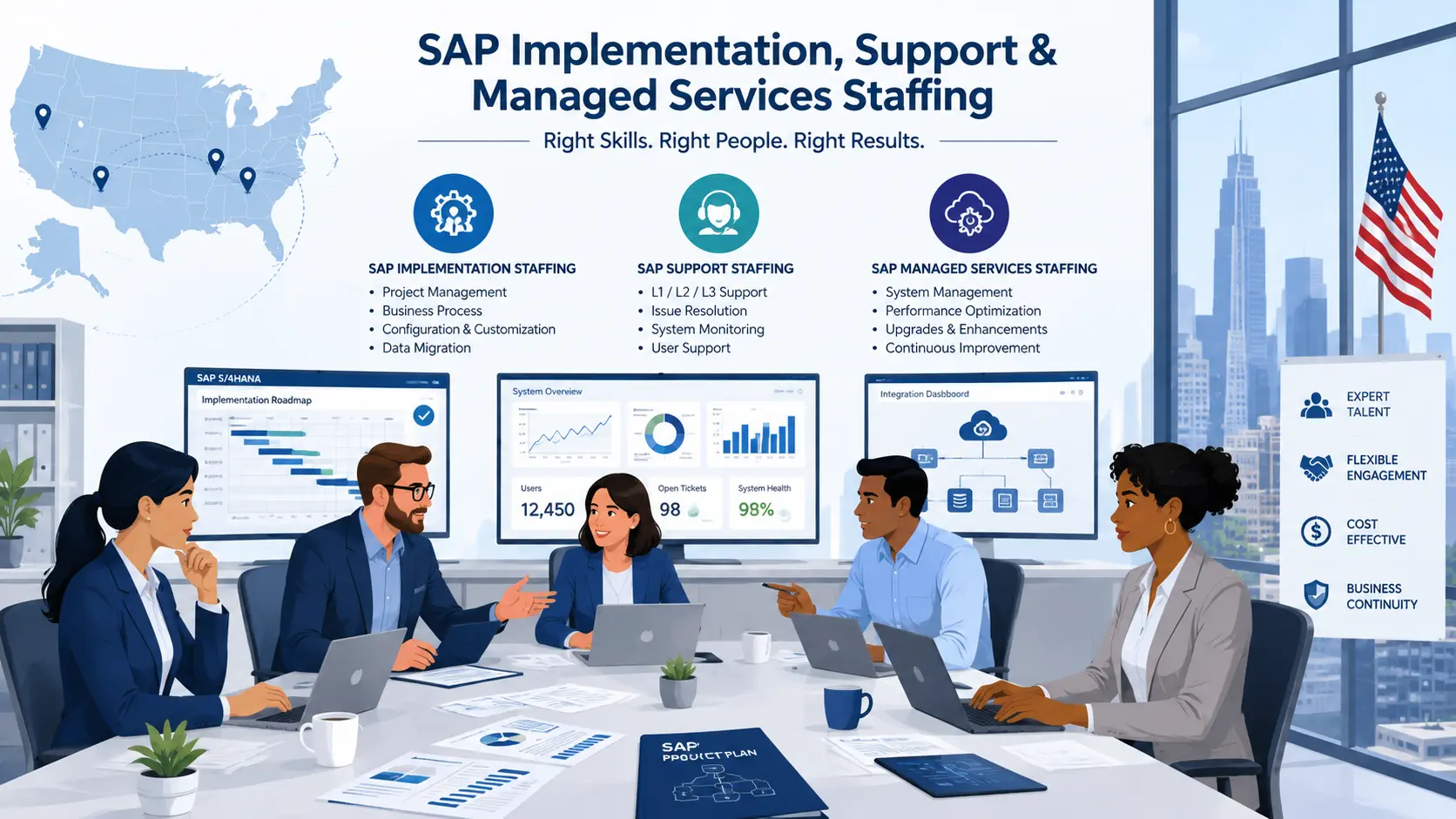
SAP Staffing for US Businesses: Implementation, Support & Managed Services
An SAP project can look perfect on paper and still run into trouble when the right people are not available at the right time. Implementation teams need experienced specialists to configure systems, migrate data, integrate applications, and support users. Once the system goes live, those needs change, but they do not disappear.
That is where SAP Implementation Staffing becomes valuable for US organizations managing complex ERP initiatives. Instead of stretching internal teams too thin or hiring permanent specialists for short-term needs, businesses can bring in qualified SAP professionals based on project requirements. The same flexible approach can support upgrades, ongoing maintenance, troubleshooting, and managed operations while helping companies control costs and maintain business continuity.
Why SAP Staffing Matters for Modern US Businesses
SAP environments often touch finance, procurement, supply chain, manufacturing, human resources, sales, and other core business functions. A small skills gap can therefore create delays across multiple departments.
For example, a US manufacturer moving to SAP S/4HANA may need an SAP functional consultant during process design, a data migration specialist during the transition, and integration expertise as systems are connected. Hiring all these professionals permanently may not make financial sense.
Staffing provides another option. Companies can access specialized expertise when it is needed, scale teams as project requirements change, and reduce pressure on their internal employees.
SAP Implementation Staffing for Complex Projects
SAP implementation projects typically move through several stages, including planning, discovery, configuration, testing, migration, training, deployment, and post-go-live stabilization. Each stage can require different technical and functional capabilities.
A retail company, for instance, might need SAP MM and SD specialists during configuration and business process testing. Later, it may require developers, integration consultants, and testing professionals before launch. A flexible staffing model allows the organization to adjust its team without rebuilding its workforce every time the project enters a new phase.
The key is not simply finding people with SAP experience. Businesses should look for professionals whose expertise matches the specific SAP modules, technologies, industry processes, and project goals involved.
What Makes Effective SAP Implementation Teams?
A strong SAP project team usually combines functional, technical, and project leadership skills. Depending on the initiative, this may include SAP functional consultants, developers, solution architects, integration specialists, data migration experts, testers, project managers, and security professionals.
Experience also matters beyond technical knowledge. A consultant who understands the challenges of a US manufacturing operation may provide more practical value to a manufacturer than someone whose experience is limited to unrelated industries.
Clear responsibilities are equally important. When everyone understands who owns configuration, testing, integration, documentation, and issue resolution, projects can move more efficiently and accountability becomes easier to maintain.
SAP Support Staffing After Go-Live
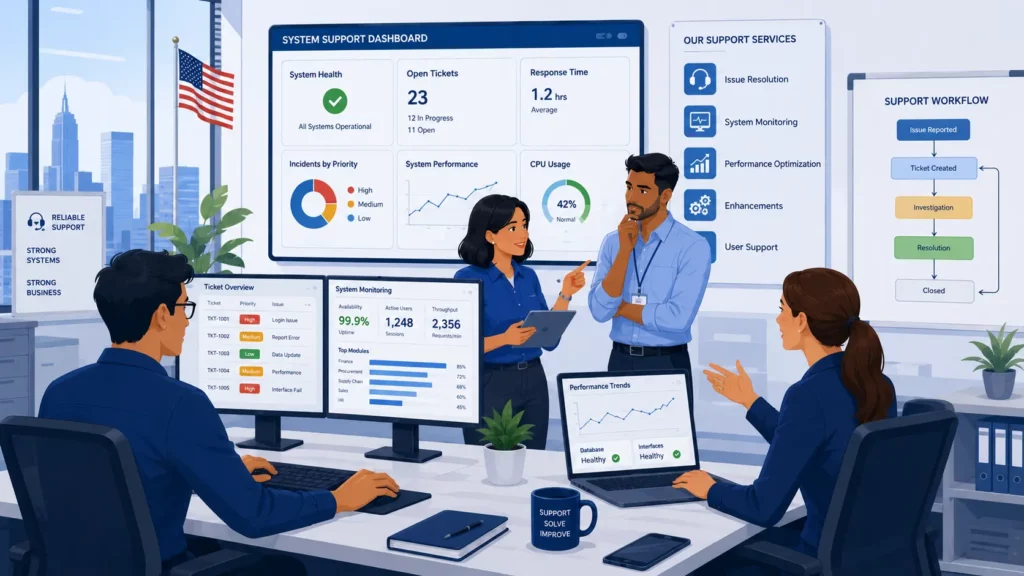
Going live is not the finish line. Once employees begin using the new SAP environment, questions, incidents, performance concerns, integration issues, and enhancement requests can emerge.
This is where SAP Support Staffing can help organizations maintain a reliable support structure. Instead of relying entirely on a small internal IT team, businesses can supplement their workforce with professionals who understand specific SAP applications and operational requirements.
Consider a distribution company that experiences recurring issues with order processing after an SAP rollout. A dedicated support professional can investigate the underlying cause, coordinate with technical teams, document the resolution, and help prevent the same problem from becoming a recurring disruption.
Building a Scalable SAP Support Model
Not every business needs the same level of SAP support. Some organizations require full-time specialists, while others need assistance during specific business hours, peak periods, upgrades, or critical incidents.
A scalable staffing approach can accommodate these differences. Support resources may be aligned with business priorities, system complexity, user volume, and service requirements.
Businesses should also establish clear escalation procedures. Routine user questions, functional issues, technical incidents, security concerns, and major outages should not all follow the same path. A defined support model helps teams respond according to urgency and business impact.
SAP Managed Services Staffing for Ongoing Operations
For companies that want longer-term operational assistance, SAP Managed Services Staffing offers another approach. Instead of treating SAP support as a collection of isolated tasks, businesses can build an ongoing service model around monitoring, maintenance, issue management, optimization, and continuous improvement.
For example, a growing US enterprise may operate SAP across multiple locations while maintaining integrations with CRM, payroll, e-commerce, and logistics platforms. Managing that environment requires consistent expertise rather than occasional troubleshooting.
A managed staffing model can provide access to specialists who understand the organization’s environment over time. This continuity can improve knowledge retention and make it easier to identify recurring issues or opportunities for optimization.
Implementation Staffing vs. Support Staffing vs. Managed Services
These staffing models serve different business needs.
Implementation staffing is primarily project-focused. It helps organizations assemble the expertise required to introduce or transform an SAP environment.
Support staffing focuses on maintaining day-to-day operations after implementation. The goal is to resolve issues, assist users, manage enhancements, and keep business processes running smoothly.
Managed services staffing takes a broader, ongoing approach. It can combine operational support, monitoring, maintenance, optimization, and specialized expertise under a structured service model.
A company may use all three over the life of its SAP environment. The important decision is choosing the right model for the current business requirement rather than assuming one approach works for every stage.
A Real-World Example: Scaling Without Overhiring
Imagine a mid-sized US healthcare supplier preparing for an SAP transformation. Its internal IT department has strong business knowledge but lacks enough specialized SAP resources to manage the implementation schedule.
Rather than hiring a large permanent team, the company could bring in experienced SAP professionals for configuration, integration, migration, and testing. As the project approaches go-live, staffing can be adjusted to focus on deployment and stabilization.
After the system becomes operational, some implementation roles can wind down while support specialists remain. If the company later expands its SAP footprint, additional expertise can be added again. This approach connects staffing levels with actual business demand.
Best Practices for Successful SAP Staffing
Successful staffing starts with planning. Define roles and deliverables before searching for consultants, and make sure internal stakeholders agree on expectations.
Documentation should also be treated as a priority. Consultants may eventually rotate off a project, so processes, configurations, decisions, and troubleshooting knowledge should be captured throughout the engagement.
Finally, measure performance using meaningful business outcomes. Project milestones, issue resolution times, system availability, user satisfaction, quality of deliverables, and successful releases can provide a clearer picture than simply counting hours worked.
Conclusion
SAP expertise is too important to leave to last-minute hiring decisions. The right staffing strategy can help US businesses access specialized skills during implementation, maintain reliable operations after go-live, and support long-term SAP improvement.
Whether the requirement involves implementation, technical support, or ongoing managed operations, the best approach is flexible, skill-focused, and aligned with business objectives. With the right professionals in place, organizations can reduce project bottlenecks, strengthen internal teams, and get more value from their SAP investment.
Looking for experienced SAP professionals for your next project or ongoing operations? Explore flexible SAP staffing and staff augmentation solutions designed to help US businesses build the right team at the right time.
Connect with Us on LinkedIn.










Leave a Reply