
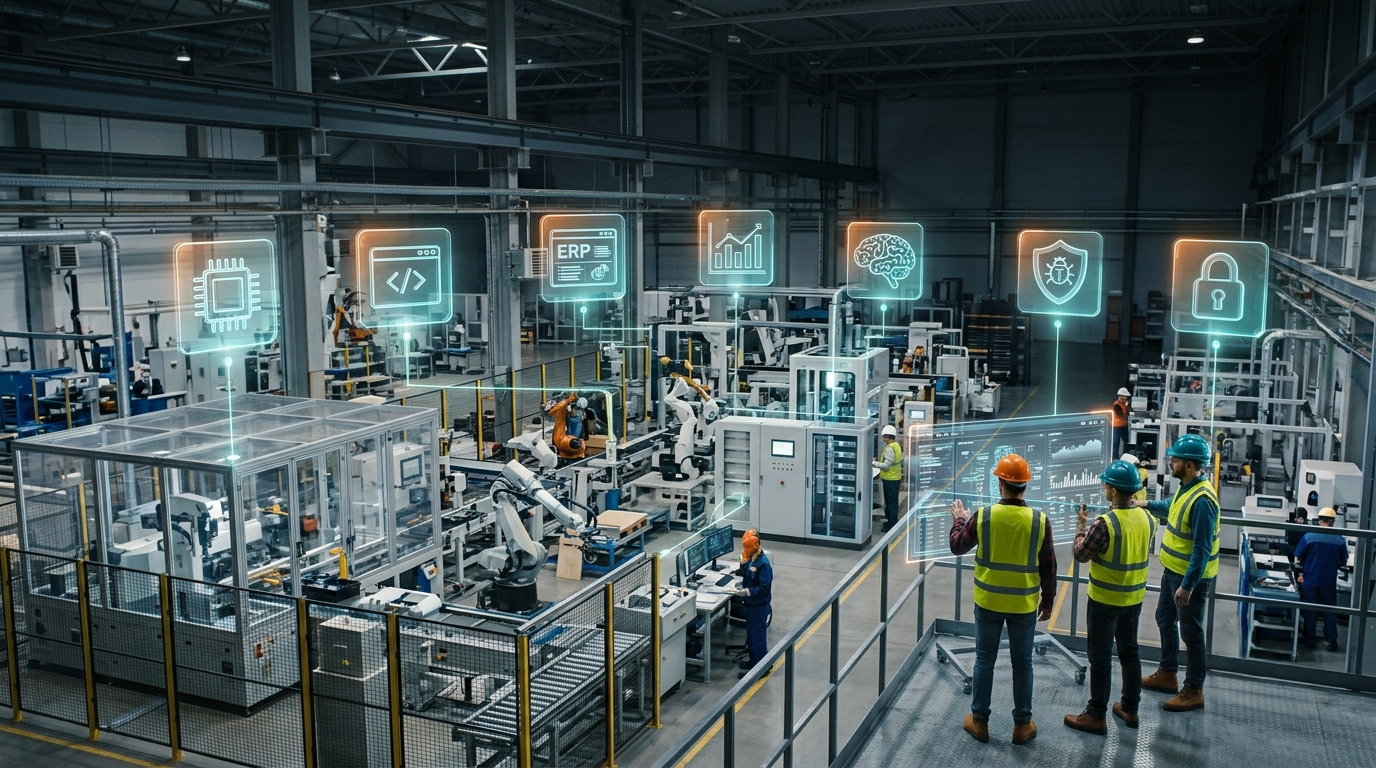
Manufacturing Technology Staffing : 7 Roles You Can Fill in Days, Not Months
DSSP2026-11-24T13:02:32+00:00A machine stops. Your only automation expert just left. Hiring takes months, but production cannot wait. That is where manufacturing technology staffing helps. It gives you skilled tech talent fast, and only for as long as you need it.
In this guide, you will learn what it means. You will see seven roles you can fill quickly. You will also learn how to pick a good partner.
What Is Manufacturing Technology Staffing?
Manufacturing technology staffing is a service that supplies skilled tech workers to factories and plants. These experts join your team for a set time. They help with software, automation, data, testing, and security.
Some people call it tech staff augmentation for manufacturers. You stay in charge of the work. Your partner finds, checks, and places the people.
- It fills tech roles, not general labor.
- It works for short and long projects.
- It skips most of the slow hiring cycle.
- You can grow or shrink the team as needed.
Why Plants Need Faster Tech Hiring
Modern factories run on connected machines, software, and data. This is often called smart manufacturing or Industry 4.0. It needs people who understand both technology and production.
Those people are hard to find. A normal hiring process can take a long time. Meanwhile, problems pile up:
- Projects slip past their deadlines.
- Current staff get overloaded.
- Skill gaps cause errors and downtime.
- Full-time hires cost more for short projects.
A flexible staffing model fixes these issues. You add experts when work peaks. You release them when the work ends.
5 Signs It Is Time to Call a Staffing Partner
- A key project is behind because you lack the right skills.
- Your team works overtime just to keep up.
- You plan a new system, like ERP or automation, and have no expert.
- One person holds all the knowledge, and losing them would hurt.
- You need a skill for only a few months.
If you said yes to even one, flexible staffing may help.
7 Roles You Can Fill With Manufacturing Technology Staffing
Here are seven roles plants often need. Datadot Labs supports talent in each of these areas.
1. Embedded Systems Engineers
They build the small computers inside machines and sensors. Plants need them for new equipment, upgrades, and smart devices.
Best for: equipment upgrades and connected devices.
2. Firmware and Hardware Test Engineers
They write and test the low-level code that runs your devices. They also check that the hardware works as planned. This lowers the risk of faults on the floor.
Best for: product launches and device reliability.
3. ERP Consultants (SAP and Oracle)
ERP systems track orders, stock, and production. These experts set up, fix, and improve them. They help when you move to the cloud or change a process.
Best for: ERP rollouts and cloud moves.
4. Data Engineers and Data Scientists
Machines create a lot of data. Data engineers organize it. Data scientists find patterns in it. Together, they help you spot waste and plan better.
Best for: reporting, analytics, and planning.
5. AI and Machine Learning Engineers
They build models for tasks like quality checks and demand planning. Start small with one clear use case. Then expand.
Best for: quality control and forecasting.
6. QA and Software Testers
Every software change needs testing. QA engineers catch bugs before they reach the plant. This keeps your lines running smoothly.
Best for: system updates and new releases.
7. Cybersecurity Specialists
Connected factories face more cyber risk. These experts protect networks, devices, and data. They also help you plan for threats.
Best for: securing connected plant systems.
Hiring Models : Choose What Fits Your Project
Not every project is the same. Good manufacturing technology staffing partners offer flexible terms.
- Short-term (1 to 3 months): Best for quick fixes or a single task.
- Mid-term (6 months): Good for upgrades and rollouts.
- Long-term (12 months): Fits ongoing support and big programs.
- Dedicated team: A full group that works only on your goals.
Staffing vs. full-time hiring:
- Staffing is faster and easier to scale.
- Full-time hiring suits roles you need for years.
- Many plants use both.
How the Process Works
A clear process saves time. Here is a simple one:
- Share your needs. Tell the partner your goals, skills, and timeline.
- Review profiles. You get matched candidates to check.
- Interview the experts. You pick the best fit.
- Start and get support. The person joins your team, with regular updates.
Datadot Labs shares that onboarding often takes 48 to 72 hours. The exact time depends on the role and your needs.
How to Choose the Right Partner
Use this checklist before you sign:
- Pre-vetted talent: Skills should be checked before you see profiles.
- Fast start: Ask how soon people can join.
- Flexible terms: You should be able to scale up or down.
- Time zone fit: Look for overlap with your working hours.
- Data safety: Ask about NDA protection.
- Clear pricing: There should be no hidden fees.
- Domain skill: The partner should understand manufacturing, not just IT.
- Real experience: Ask for client references.
FAQs
1. What does a manufacturing technology staffing partner do?
It finds, checks, and places tech experts in your plant team. These can be engineers, testers, data experts, and security staff. You guide the work, and they fill the skill gap.
2. How fast can I fill a tech role?
It depends on the role. Some providers, including Datadot Labs, share a 48 to 72 hour onboarding time. Rare skills may take longer.
3. Is staffing better than full-time hiring?
It depends on the need. Staffing is faster and more flexible. Full-time hiring is better for long-term core roles. Many manufacturers mix both.
4. Which tech roles can I hire?
Common roles include embedded engineers, firmware and test engineers, ERP consultants, data experts, AI engineers, QA testers, and cybersecurity specialists.
5. Can I hire for just a few months?
Yes. Many partners offer 1, 3, 6, or 12-month terms. Dedicated teams are also available for bigger needs.
Conclusion
Slow hiring should not slow your plant. With the right partner, you can add skilled tech experts in days, not months. Start by listing the roles you need most. Then pick a partner who is fast, clear, and flexible.
Ready to close your skill gaps? Share your requirements with Datadot Labs and see how quickly the right team can come together.
Connect with us on LinkedIn to stay updated on our latest news, insights, and career opportunities.









Leave a Reply