


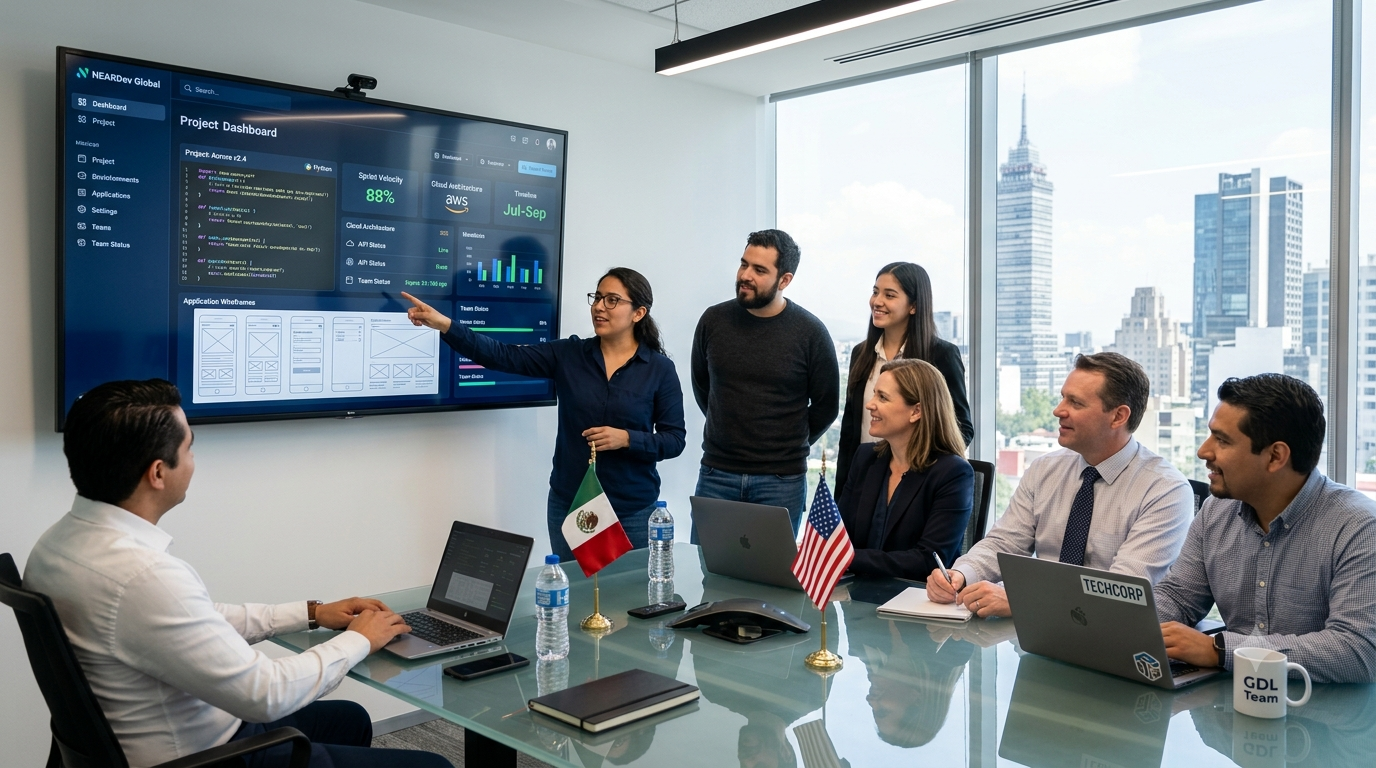
Software Development Companies in Mexico: A Smart Guide for U.S. Businesses
What if you could expand your technology capabilities without building an entirely new development department in the United States? That is one reason more businesses are exploring Software Development Companies in Mexico as a practical way to access skilled technology professionals, modern development practices, and flexible delivery models.
Mexico’s proximity to the U.S., overlapping business hours, and growing technology ecosystem make it an attractive nearshore destination. But choosing a development partner should involve more than comparing hourly rates. The right company should understand your business goals, communicate clearly, protect your data, and build software that can grow with your organization.
So, what should a U.S. business look for before making that decision? Let’s break it down.
Why Are U.S. Businesses Considering Mexico for Software Development?
Nearshore development has become increasingly appealing to American companies that want additional engineering capacity while keeping collaboration relatively simple. Mexico offers geographic proximity to the United States, which can make meetings, project coordination, and real-time communication easier than with teams working in distant time zones.
There is also a growing pool of developers working with technologies such as cloud computing, artificial intelligence, mobile development, web applications, DevOps, and data engineering. For companies facing hiring challenges, this can provide another way to access specialized technical skills without limiting recruitment to their local market.
Nearshore Collaboration Can Feel More Natural
Imagine a U.S. company in Texas working with a development team in Monterrey. Instead of waiting until the next business day to resolve an urgent technical question, both teams can often communicate during overlapping working hours.
That matters when a project involves frequent feedback. Developers can discuss requirements with product managers, designers can review interfaces with stakeholders, and technical issues can be addressed while the rest of the team is still online.
How to Choose Software Development Companies in Mexico
Not every development company is the right fit for every project. Before signing a contract, start by defining what you actually need. Are you building a new SaaS platform, modernizing an older application, developing a mobile app, integrating business systems, or adding engineers to an existing team?
Once the requirement is clear, evaluate potential partners against practical criteria such as technical expertise, communication, security practices, project methodology, portfolio quality, and scalability.
A strong partner should be able to explain how it plans to solve your problem—not simply list programming languages and frameworks.
Check Their Technical Experience
Look for experience that matches your project rather than choosing a company solely because it has a large portfolio. If your project requires cloud migration, for example, ask about previous cloud implementations, deployment practices, security controls, testing, and post-launch support.
For a healthcare or financial application, industry knowledge may also matter because privacy, compliance, and data protection can influence architecture and development decisions.
Look Beyond the Portfolio
A polished portfolio is useful, but it does not tell the whole story. Ask how the team handled changing requirements, technical challenges, deadlines, testing, and maintenance.
You can also request references or case studies where appropriate. A reliable provider should be comfortable discussing its development process and explaining how it measures project success.

What Development Services Can U.S. Companies Outsource?
One advantage of working with a nearshore technology partner is flexibility. Businesses can use external teams for a complete software project or supplement their existing engineering department with specific technical expertise.
Common services include:
- Custom web application development
- Mobile app development
- SaaS product development
- Enterprise software development
- API development and integration
- Cloud application development
- Legacy application modernization
- UI/UX development
- Quality assurance and software testing
- DevOps and continuous delivery
- Data engineering and analytics
- AI and machine learning solutions
- Dedicated development teams
- IT staff augmentation
The best model depends on your situation. A startup might need a complete product team, while an established U.S. company may only need three additional engineers for a six-month project.
Custom Software vs. Off-the-Shelf Platforms
Should you build software from scratch or purchase an existing platform? There is no universal answer.
Off-the-shelf software can be faster to implement and may work well for standardized business processes. Custom development becomes more attractive when your workflows are unique, existing systems do not integrate well, or your software itself creates a competitive advantage.
For example, consider a logistics company with a specialized dispatch process. If standard software forces employees to use multiple disconnected systems, a custom platform could bring scheduling, tracking, customer communication, and reporting into one workflow.
The important question is not, “Can we build it?” It is, “Will building it solve a meaningful business problem better than the alternatives?”
How Much Does Nearshore Software Development Cost?
Cost is one of the first questions U.S. companies ask, but comparing vendors purely by hourly rate can be misleading.
A lower rate does not automatically mean a lower total project cost. Poor requirements, weak testing, frequent rework, communication problems, and missed deadlines can quickly eliminate an apparent price advantage.
Instead, consider the total value of the engagement. Evaluate the team’s technical capability, delivery process, expected timeline, communication model, maintenance plan, and quality standards alongside the proposed cost.
Ask vendors to explain what is included in their pricing. Does it cover QA? Project management? Documentation? Deployment assistance? Post-launch support? Clear answers make vendor comparisons much easier.
Security Should Be Part of the Conversation From Day One
Security should never be treated as a final checklist before launch. It needs to influence architecture, development, testing, access control, deployment, and maintenance from the beginning.
When evaluating a development partner, ask how it manages source-code access, credentials, data, environments, backups, vulnerability testing, and developer permissions. Discuss your own security requirements before development starts.
For businesses handling sensitive customer or financial information, contract terms and security responsibilities should also be reviewed carefully with the appropriate legal and security professionals.
A Real-World Example: Growing Without Overbuilding
Consider a fictional U.S. e-commerce company preparing for rapid growth. Its internal team has a product manager and two developers, but the company needs additional backend and QA expertise before launching a major platform update.
Instead of immediately hiring a large permanent department, the company could work with a nearshore development team. The external engineers handle selected development and testing responsibilities while the internal team maintains product ownership and strategic control.
As the workload changes, the company can adjust the team size. That flexibility can be particularly useful for businesses dealing with seasonal demand, new product launches, or short-term technology initiatives.
Questions to Ask Before Hiring a Development Partner
Before choosing among Software Development Companies in Mexico, prepare questions that reveal how the company actually works.
Ask:
- Who will work on our project?
Understand the roles, experience levels, and expected availability of the proposed team. - How do you communicate with U.S. clients?
Clarify meeting schedules, reporting, collaboration tools, and response expectations. - How do you handle changing requirements?
A good development process should accommodate reasonable changes without creating confusion. - What is your testing process?
Ask how functional, performance, security, and regression testing are handled. - How do you protect our intellectual property and data?
Discuss contracts, access controls, confidentiality, and security procedures. - What happens after launch?
Determine whether maintenance, monitoring, bug fixes, and future development are available.
These questions can reveal more about a potential partner than a generic company presentation.
Frequently Asked Questions
Are Software Development Companies in Mexico a good option for U.S. businesses?
They can be a strong option when a company needs skilled development resources, nearshore collaboration, and flexible delivery. However, businesses should evaluate technical expertise, communication, security, pricing, and project experience before selecting a provider.
What is nearshore software development?
Nearshore software development means working with a technology team located in a nearby country or region. For U.S. businesses, Mexico is a popular nearshore destination because of its geographic proximity and overlapping working hours.
Is Mexico suitable for custom software development?
Yes. Development teams in Mexico work across areas such as web applications, mobile apps, cloud solutions, SaaS products, enterprise platforms, APIs, DevOps, and data technologies. The suitability of a specific provider depends on its experience and your project requirements.
How do I compare software development vendors?
Start with your requirements, then compare technical expertise, relevant case studies, communication practices, security processes, team structure, delivery methodology, support options, and total cost. Avoid making your decision based only on hourly rates.
Should a U.S. startup use a dedicated development team?
A dedicated team can make sense when a startup needs ongoing engineering capacity but does not want to build a full internal department immediately. The model can provide developers, QA engineers, designers, and other specialists based on the startup’s evolving needs.
Conclusion
Choosing a technology partner is ultimately about finding the right balance between technical capability, communication, security, flexibility, and business value. Mexico can offer U.S. companies a practical nearshore development option, but the provider still needs to earn your trust through strong processes and relevant experience.
The smartest approach is simple: define your requirements first, evaluate potential partners carefully, ask direct questions, and choose a team that understands the outcome you want—not just the technology you plan to use.
Ready to explore your software development options? Start by documenting your project goals, required technologies, timeline, and expected outcomes. Then speak with qualified development providers to determine which engagement model fits your business best.
Connect with us in LinkedIn











Leave a Reply