
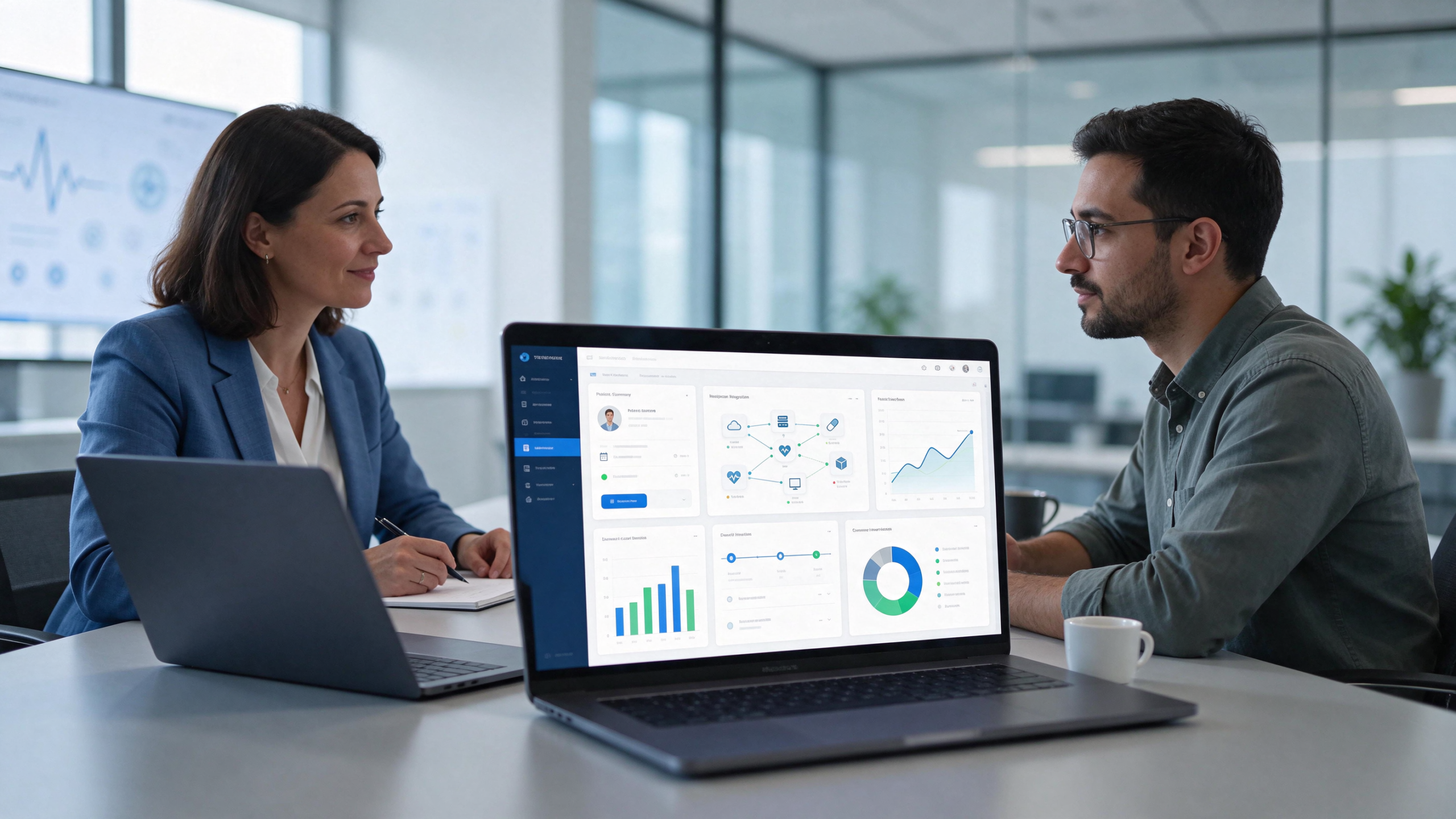
How to Find the Right Clinical Software Developers for Your Business
DSSP2026-11-26T12:36:30+00:00Healthcare technology is growing quickly. Hospitals, healthcare organizations, and HealthTech companies need reliable software to manage patient information, support clinical workflows, and improve healthcare services.
However, finding the right Clinical software developers can be challenging. Healthcare software projects often require specialized programming skills, healthcare technology knowledge, system integration experience, and strong security practices.
Hiring the wrong developers can lead to project delays, technical problems, and extra costs.
The right developers can help your business build, improve, and maintain healthcare applications. In this guide, you will learn how to find skilled developers, what skills to check, and how to choose the right staffing approach.
What Are Clinical Software Developers?
Clinical software developers are technology professionals who build, test, improve, and maintain software used in healthcare environments.
They help create applications that support healthcare services and business operations.
Their work may include:
Developing electronic health record (EHR) systems.
Building patient portals and healthcare mobile apps.
Creating telehealth platforms.
Developing clinical data management systems.
Connecting healthcare applications through APIs.
Improving existing medical software.
Testing and maintaining healthcare applications.
These developers do not need to be medical professionals. However, they should understand the technical and workflow requirements of the healthcare projects they support.
Why Is Finding the Right Clinical Software Developer Important?
Healthcare applications have requirements that can differ from ordinary business software.
For example, a hospital application may manage patient appointments, medical records, billing information, and communication between departments.
The right developers can help businesses handle these requirements effectively.
1. Better Understanding of Healthcare Workflows
Healthcare applications support doctors, nurses, patients, and administrative teams.
Developers with healthcare technology experience may better understand how these users work with software. This can help them build applications that are practical and easy to use.
2. Improved System Integration
Healthcare organizations often use several software platforms.
For example, an EHR system may need to connect with laboratory applications, patient portals, or appointment systems.
Developers with API and integration experience can help connect these platforms based on project requirements.
3. Stronger Data Security Practices
Healthcare applications may handle sensitive patient information.
Developers should understand secure coding, authentication, access control, encryption, and safe data handling.
Businesses must also ensure that their software development processes meet applicable privacy and regulatory requirements.
4. Better Application Quality
Software errors can affect application performance and user experience.
Experienced developers can work with quality assurance (QA) teams to test features, identify problems, and improve software reliability.
How to Find the Right Clinical Software Developers for Your Business
Finding suitable developers requires more than reviewing resumes. You should evaluate technical knowledge, healthcare experience, communication skills, and project requirements.
Follow these seven steps.
1. Define Your Healthcare Software Project Requirements
Start by understanding what your business wants to build or improve.
Different healthcare applications need different technical skills.
Healthcare project | Possible developer requirements |
|---|---|
EHR application | Backend, frontend, and database developers |
Telehealth platform | Web, mobile, and integration developers |
Patient portal | Full-stack and mobile developers |
Clinical data system | Database and backend developers |
Healthcare integration | API and interoperability developers |
Hospital management system | Enterprise application developers |
Create a list of your project goals, required features, preferred technologies, and expected timelines.
This will help you find developers who match your needs.
2. Evaluate Healthcare Technology Experience
Healthcare technology experience is an important factor when selecting developers.
Look for candidates who have worked on projects involving:
Electronic health records
Healthcare management systems
Clinical applications
Telehealth software
Patient engagement platforms
Healthcare data integration
Medical software applications
Ask candidates to explain their previous projects and their specific responsibilities.
Also, check whether their experience matches the type of application your business plans to develop.
3. Check Technical Skills and Programming Knowledge
Clinical software developers need strong software development skills.
Depending on your project, useful technical skills may include:
Programming languages
Java
Python
JavaScript
C#
TypeScript
Frameworks and technologies
React
Angular
Node.js
.NET
Spring Boot
Database technologies
PostgreSQL
MySQL
Microsoft SQL Server
MongoDB
Cloud technologies
Microsoft Azure
Amazon Web Services (AWS)
Google Cloud
You do not need every developer to know all these technologies. Focus on the tools that match your application and existing technology stack.
4. Look for Healthcare Interoperability Knowledge
Healthcare applications often need to exchange information with other systems.
For this reason, developers may need knowledge of healthcare interoperability standards.
Important examples include:
HL7: Standards that support the exchange of healthcare information.
FHIR: A standard that supports healthcare data exchange through structured resources and APIs.
DICOM: A standard used to manage and exchange medical imaging information.
The required standards depend on the project.
For example, an application that connects with an EHR platform may need developers who understand relevant FHIR resources and API integration.
5. Assess Security and Compliance Awareness
Security should be considered from the beginning of healthcare software development.
Clinical applications may process sensitive patient data. Developers should understand how to protect this information throughout the software lifecycle.
Evaluate their knowledge of:
Authentication and authorization
Role-based access control
Data encryption
Secure API development
Audit logging
Vulnerability testing
Secure database management
If your business operates under regulations such as HIPAA, make sure the project follows the applicable requirements. Hiring a developer with security knowledge does not automatically make an application HIPAA compliant.
6. Evaluate Communication and Team Collaboration
Technical knowledge is important, but developers must also work well with other team members.
Healthcare software projects often involve:
Software developers
Healthcare IT professionals
Product managers
Clinical specialists
QA engineers
Security professionals
Project managers
During interviews, ask candidates how they handle changing requirements, explain technical problems, and work with non-technical stakeholders.
Good communication can help reduce misunderstandings and improve project coordination.
7. Conduct Technical Assessments and Interviews
Before hiring, evaluate candidates through practical assessments.
You can use:
Programming tests
API development exercises
Database design tasks
Code reviews
Software debugging exercises
Technical interviews
Healthcare project discussions
For example, ask a candidate to explain how they would design an API for exchanging patient appointment information.
Practical assessments help you understand whether candidates can apply their knowledge to real project requirements.
What Skills Should You Look for in Clinical Software Developers?
The ideal skill set depends on your application and business goals.
Skill | Why it matters |
|---|---|
Healthcare application development | Supports healthcare software requirements |
Programming | Builds and maintains applications |
API development | Connects different software systems |
Database management | Organizes application data |
HL7 and FHIR knowledge | Supports healthcare interoperability where required |
Cloud computing | Supports modern application environments |
Cybersecurity awareness | Helps protect sensitive information |
Software testing | Helps identify and fix application issues |
Communication | Supports effective teamwork |
A suitable candidate should have the technical skills needed for the project and the ability to work with healthcare stakeholders.
Where Can You Find Clinical Software Developers?
Once you understand your requirements, you can explore different hiring channels.
1. Online Job Platforms
Publish job openings on professional job platforms and technology recruitment websites. These platforms help you review candidate profiles, experience, and technical skills.
2. Professional Networks
Professional networks can help you connect with developers who have healthcare technology experience. Review their work history, technical background, and recommendations.
3. Technology Recruitment Agencies
Recruitment agencies can help identify developers based on your required skills and experience. This option may be useful when your internal recruitment team has limited resources.
4. IT Staff Augmentation Companies
Staff augmentation companies help businesses add skilled professionals to their existing development teams.
This approach can be useful when you need additional developers for a specific project or want to expand your technical team without immediately creating permanent positions.
Learn more about DataDotLabs Staff Augmentation Services.
In-House Hiring vs. Clinical Software Developer Staff Augmentation
Businesses can choose between permanent hiring and staff augmentation. Both options have advantages.
Factor | In-house hiring | Staff augmentation |
|---|---|---|
Employment model | Permanent employees | Professionals for an agreed engagement |
Recruitment | Managed internally or through recruiters | Staffing partner helps source candidates |
Team expansion | Based on permanent hiring needs | Flexible project-based expansion |
Project duration | Suitable for ongoing roles | Short-term or long-term support |
Team management | Managed as internal employees | Integrated into the existing project team |
Permanent hiring may suit long-term business needs. Staff augmentation may be useful when you need specialized skills or additional team capacity for a project.
How DataDotLabs Can Support Your Technology Staffing Needs
Finding professionals with the right technical skills can be difficult when your business needs to expand its development team.
DataDotLabs provides staff augmentation services to help businesses add technical professionals based on their project requirements.
This approach can help organizations:
Add developers to existing teams.
Address technical skill gaps.
Support software development projects.
Expand development capacity.
Access professionals for different engagement durations.
If your organization is planning a healthcare software project, define the required technical skills, healthcare experience, security expectations, and project scope before selecting professionals.
Explore DataDotLabs Staff Augmentation Services to learn more about adding technical resources to your team.
Frequently Asked Questions
1. What qualifications should clinical software developers have?
They should have software development knowledge, programming experience, database skills, and an understanding of healthcare technology requirements. Experience with EHR systems, APIs, HL7, or FHIR may also be useful.
2. How do I find experienced healthcare software developers?
You can search through job platforms, professional networks, technology recruitment agencies, and IT staff augmentation providers. Review candidates’ previous projects, technical skills, and practical assessment results.
3. What programming languages are used in clinical software development?
Common languages include Java, Python, JavaScript, C#, and TypeScript. The right choice depends on the application’s architecture and technology requirements.
4. Is healthcare experience necessary for software developers?
Not every developer needs direct healthcare experience. However, developers working on clinical applications can benefit from understanding healthcare workflows, patient data handling, interoperability, and relevant industry requirements.
5. Should I hire clinical software developers or use staff augmentation?
Permanent hiring may suit businesses that need long-term employees. Staff augmentation can be useful when you need additional developers, specialized technical skills, or flexible team capacity for a project.
Conclusion
Finding the right clinical software developers requires careful planning and technical evaluation. Businesses should look beyond programming knowledge and consider healthcare technology experience, system integration, security awareness, communication, and project requirements.
Start by defining your software goals, identifying the required technical skills, reviewing candidate experience, and conducting practical assessments.
If your organization needs additional development resources, staff augmentation can provide a flexible way to expand your existing team.
Choosing the right developers can help your business build reliable healthcare applications and support its long-term technology goals.










Leave a Reply